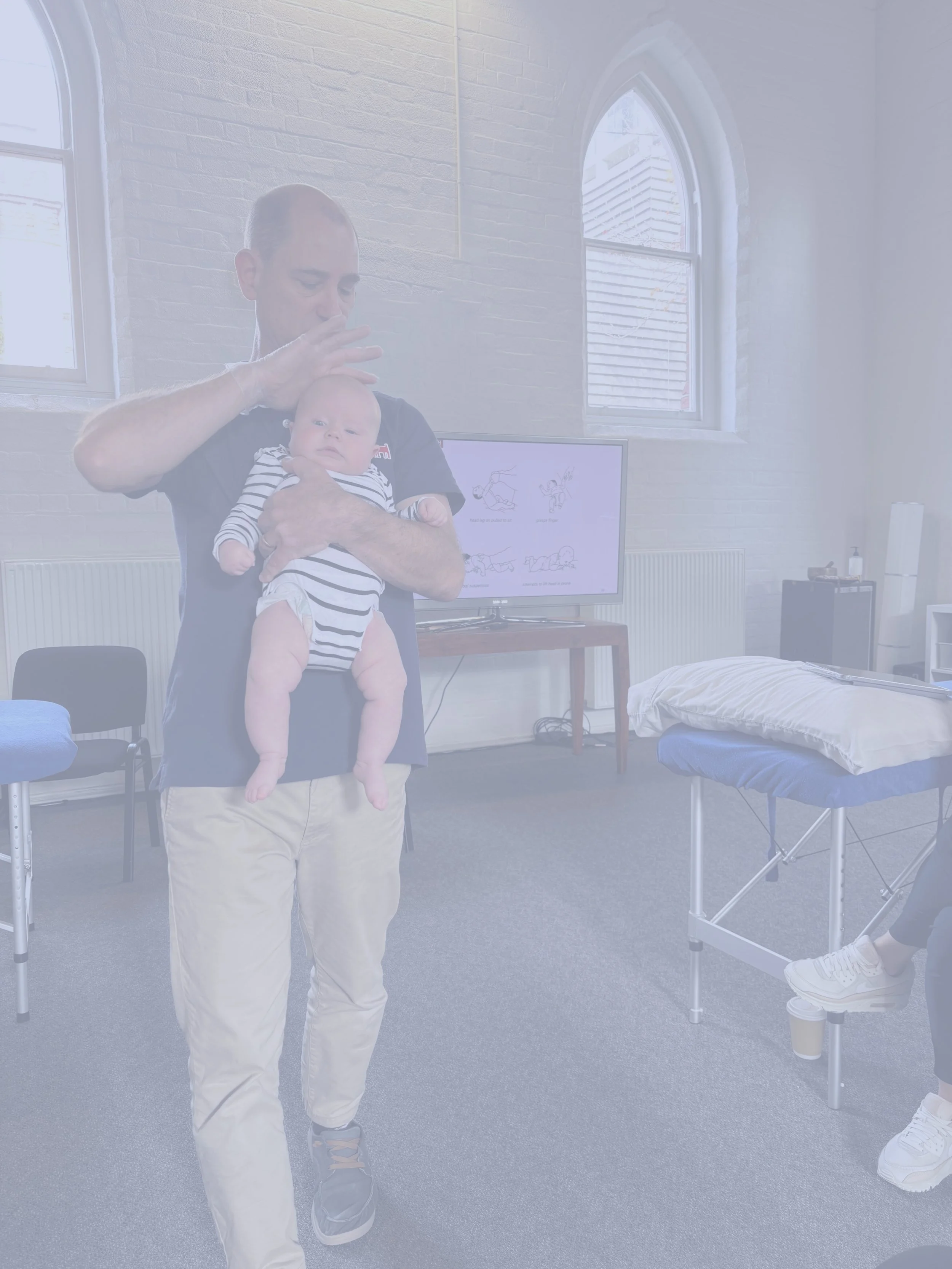
Face-to-Face CourseAn Osteopathic Approach to Paediatrics
with Jamie Taylor
1-3 May 2026 • 9am-4pm each day • Melbourne, AustraliaOsteopaths, whether new to paediatrics or qualified in the field, can struggle with assessment and treatment of a paediatric infant. Formal paediatric training can highlight medical assessment, terminology and methodology; however, the osteopathic practitioner can be left overwhelmed on how to apply this information and knowledge within their clinical setting.
This is a pragmatic course which breaks down the fundamentals of paediatrics for the infant in the osteopathic field. It gives you a structural framework for common paediatric conditions that present to osteopaths, an understanding of how these conditions are managed medically, and it highlights the role that we have as osteopaths in the management of the paediatric infant.
This course will help you:
Understand common paediatric conditions presenting in the osteopathic practice and terminology that is commonly used.
Be able to effectively differentially diagnose through signs, symptoms and red flags to ensure you know when to refer to medical professionals.
Learn practical osteopathic techniques for assisting infants in your practice and develop basic patient handling skills.
Be able to educate parents and carers in a way that they understand, through breaking down the jargon and using words that mean something to them helping you build greater rapport in your patient-practitioner relationship.
Learn how to integrate with a team of medical and health professionals to ensure that your patient is receiving the best outcomes for their care.
The story behind the course

Jamie Taylor has worked in the osteopathic paediatric field since his third year of university. As an undergraduate student he began to assist in resolving early birth-related experiences in the paediatric infant.
With the birth of his own two boys, Jamie's interest in paediatrics grew. Due to the lack of formal osteopathic paediatric training available, however, Jamie initially struggled when treating paediatric patients - he was overwhelmed by the technical jargon in the field and experienced a lot of fear and anxiety while working with paediatrics. This didn’t stop his passion for paediatrics; in fact it helped it grow.
After years of experience in the paediatric field, combined with his memories of his initial overwhelm, Jamie has a burning desire to teach paediatrics in a simple, accessible way to make working with paediatrics genuinely possible for any osteopath who wants to take this path as well.
For the last 20 years, Jamie has been teaching peadiatrics in a more pragmatic way, using straightforward terminology and techniques. Through his down-to-earth approach, he has helped thousands of osteopaths feel more at ease working in this field. He’s also made it much easier for osteopaths to integrate existing and new knowledge, so they can assist paediatric infants and their families in a more informed way.
CurriculumWhat we’ll cover

Part 1 of Day 1 explores an osteopathic perspective on the birth process including common conditions seen in practice. During this seminar, Jamie will outline osteopathic diagnostics and red flags for consideration. Common areas influenced through the birth process will be outlined through an osteopathic perspective. Osteopathic techniques will be demonstrated for you to use in practice.
Part 2 explores medical and osteopathic concepts surrounding reflux and the unsettled baby. During this seminar, Jamie will break down this complex topic so that you can easily assess and treat this patient group and educate parents effectively using simple language that they understand.
Part 1 What we’ll cover
Normal birth process (midwife perspective) + common presentations + interventions - presented by Midwife Kerri-Ann Baxter (recording)
Osteopathic perspective on birth process: common conditions seen in osteopathic practice + DDx + Red Flags.
Normal delivery - osteopathic perspective from the forces of labour.
Common areas influenced through the birth process.
Common areas of grouping - compression, flexion + extension lesioning.
Common sites of intraosseous strain.
Common conditions seen in osteopathic practice.
Osteopathic perspective of the influences from cord around neck and limb presentation during birth.
Common musculoskeletal conditions seen following birth, including concepts of first breath, cephalohematoma, blocked tear duct, jaundice and foetal distress.
Osteopathic Technique - 4 parts of occiput, sacrum, clavicle, 1st rib, 2nd Rib, anterior cervical fascia, first breath.
Part 1 Outcomes
Understand common areas influenced by the birth process
Understand common conditions seen in osteopathic practice
Identify osteopathic strain patterns that affect the paediatric infant
Learn tests and osteopathic techniques to assist with integration of these concepts.
Part 2 What we’ll cover
Definition of unsettled infant
Why we don’t call it colic
Common Signs and symptoms of unsettled baby
Educating parents of a paediatric infant using simple language
Causal factors for unsettled baby - immaturity of gut, gut microbiome, peristaltic wave, poor latch + suck changing arousal patterns, infant pain interpretation from osteopathic perspective.
Sleep positioning - definition SIDS guidelines
Withdrawal + Moro Reflex - precursor to hyper aroused and unsettled infant
Winding settling techniques
Handling techniques for practitioners + parent
Nutritional influences on unsettled baby and supplementation advice for patients.
Reasoning around referral to allied health + medical prof.
Common medication used for unsettled baby
Current definition of true reflux - premature baby predisposition to reflux + unsettled symptoms + transitional reflexes + immaturity with moro, gag.
Medical diagnostic procedures, medical management for reflux + preterm, term infant reflux
Positioning advice to assist infant with reflux
Realistic outcomes for reflux - positing, management of severe reflux + role of osteopath
Osteopathic Technique - umbilical release, peritoneal release, stomach and central tendon release, anterior thorax release, clavicle, first rib + anterior cervical fascia.
Home based advise and techniques for parent
Part 2 Outcomes
Gain an understanding of reflux and the unsettled baby
Explore common signs and symptoms of reflux + unsettled baby
Identify your role as an osteopath in the management of these paediatric infants, knowing how to integrate with allied and medical professionals and when to refer.
Gain a comprehensive structural framework for working with babies with reflux + unsettled infants within the osteopathic setting
Learn how to educate parents using simple language that they can understand.
Undertake practical osteopathic techniques to assist with the integration of these concepts.
When osteopaths are lacking in the current knowledge in feeding, latching and tongue tie, diagnostics can be a challenge with paediatric infants. Day 2 explores osteopathic concepts surrounding feeding and tongue tie. During this seminar, Jamie will present the current research, epidemiology and outcome measures with regard to feeding, latch and tongue tie so that you can easily assess and treat these patients using an osteopathic lens.
What we’ll cover
Definition of feeding issues
List of common inability to suck affectively, click, chomping, gagging - signs and symptoms of feeding difficulties
Causal factors for osteopathic dysfunction from the birth process - posterior presentation, brow presentation; Intervention - forceps + ventouse + fast/long labour
Definition of Tongue Tie
Diagnosis of Tongue Tie (Classic Ant + Post Tongue Tie) + Lip tie
Traditional + current language around tongue tie
Epidemiology + current research surrounding Tongue Tie
Standard Assessment Tools - Hazelbaker + Bristol Assessment (Outcome measures)
Osteopathic palpation of mouth - lip, tongue, jaw, hyoid, upper Cx complex
Osteopathic Treatment Techniques - lip sweep, MFR genioglossus, digastric, masseter deep + superficial, decompression TMJ
Outcomes
Gain an understanding of the concepts of feeding and tongue tie
Explore the definition, epidemiology and research surrounding tongue tie
Identify causal and predisposing factors.
Gain an understanding of the current standard assessment tools for tongue tie knowing when to refer these patients.
Have a comprehensive structural framework for working with babies with feeding + latch + tongue tie concerns within the osteopathic setting.
Learn how to educate parents using simple language that they can understand.
Undertake practical osteopathic techniques to assist with the integration of these concepts.

Day 3 explores medical and osteopathic concepts surrounding reflux and the unsettled baby. During this seminar, Jamie will break down this complex topic so that you can easily assess and treat this patient group and educate parents effectively using simple language that they understand.
What we’ll cover
Definition Plagiocephaly - different forms of plagiocephaly - handout
History taking - causal factors, sleep position, feeding position, birth
Predisposing factors - birth, breastfeeding, sleep position
Define Torticollis - development of SCM, upper ribs + scalenes (any associated pathology)
Historical change in definition of Plagiocephaly - traditional (brain injury) current (positional).
Causal factors of plagiocephaly + current trends with WHO guidelines.
Strategies for parents to manage plagiocephaly.
Medical management of plagiocephaly.
Helmets - research + OrthoKids
Direct + Indirect Releases - Osteopathic technique + strategy - frontal, parietal moulding release, frontal metopic release, occipital squama, temporal decompression, upper Cx releases, articulation, oscillation, traction, working with ATNR, squama, OA, C1-3
Parental strategies around head positioning
Definition and classic signs and symptoms of head favouring + asymmetrical neck
Influences of sleep position and WHO guidelines
Home management for parents - safety wedges + side sleeping + movement based exercises and activities to teach parents.
Osteopathic Treatment Techniques - upper Cx traction, rotation, suboccipital MFR, OA decompression, SCM, scalenes stretch (rotation, sidebending), using ATNR to activate head rotation.
Outcomes
Understand concepts of plagiocephaly and head favouring in the paediatric infant.
Explore causal and predisposing factors will be explored through an osteopathic lens,
Gain insight into the medical management of plagiocephaly.
Learn how to educate parents and empower them with home management techniques.
Have a comprehensive structural framework for working with plagiocephaly + head favouring within the osteopathic setting.
Be able to give advice to parents including handling techniques using simple language.
Learn practical osteopathic techniques to assist with the integration of these concepts.
This course is ideal for osteopaths who:
Are new or experienced in working with paediatrics and want to break down concepts of the osteopathic approach to paediatrics in a pragmatic way.
Are passionate about working in the field of paediatrics
Want to gain more knowledge and practical skills in working with paediatrics.
Why take this course?
This course will help you:
Feel more confident and competent in assessing and treating developmental delay
Be able to support a client base that often doesn't have anywhere else to go.
Gain a sense of making a difference in a very challenging area of paediatrics.
Help a wider patient-base reach their full potential
Create better dynamics for children within a social, school and family setting.
See an increase in your success dealing with children with a wide range of otherwise difficult to treat conditions under the developmental delay umbrella.
Allow children to have more confidence to flourish throughout their life.
Your presenter
Jamie Taylor
Jamie Taylor was born in Palmerston North, Manawatu, New Zealand. He trained at the European School of Osteopathy, (ESO) in Maidstone, England, 1990-1994.
During his final year he began to enjoy working with newborns and pregnant mother’s. He very quickly began to see the importance of taking the trauma out of childbirth for mothers and postpartum distress in babies. When he graduated he worked in London at the Osteopathic Centre for children where this conviction grew. In 1997 he began assisting on the undergraduate Osteopathic technique classes at the ESO and clinical supervision in the undergraduate children's clinic, where he stayed until he moved back to NZ in 2005. He moved back to New Zealand in November 2005 after completing his masters in Osteopathy.
Jamie’s practice is predominantly focused on babies and pregnancy and postnatal mothers.
Regulation: Jamie Taylor is a member of the register of Osteopaths in New Zealand and the society of Osteopaths New Zealand.
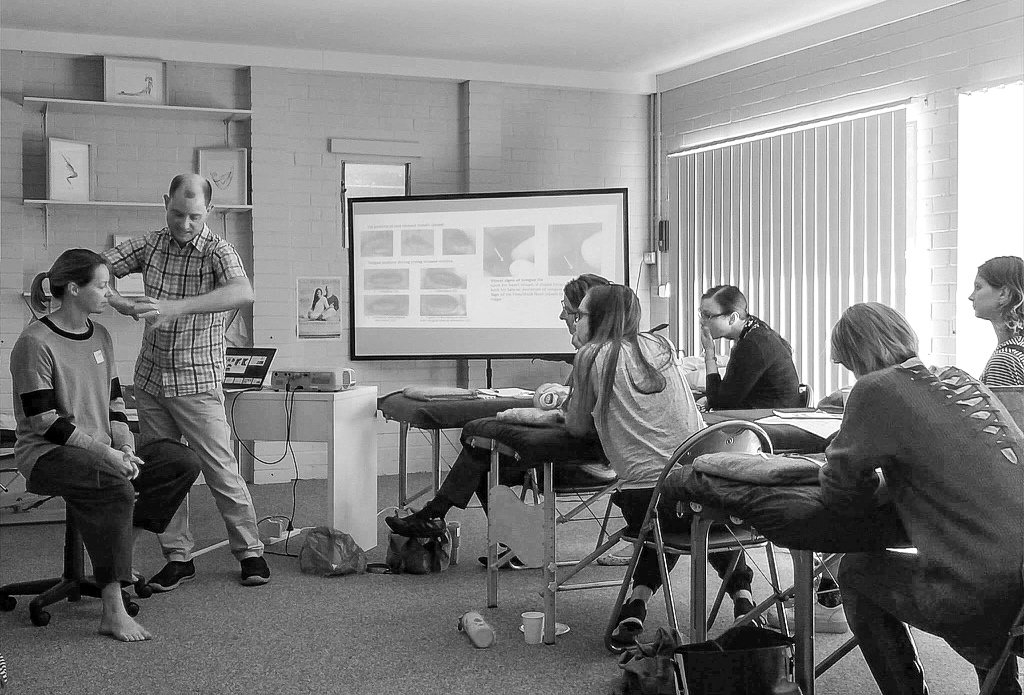
“I have completed a number of courses run by Jamie Taylor. I have found them to be thorough and straight to the point. The information and techniques taught are very easy to implement into everyday practice. I have found his courses to be exceptionally beneficial no matter weather they be building on prior knowledge and experience or if you are learning content that is completely new.”
What’s unique about this course
This course breaks down the complex topic of paediatric osteopathy to make it easier to assess and treat infants.
Each seminar provides simplified, clear and specific osteopathic techniques to enable you to work with paediatrics infants with ease.
This course highlights common paediatric conditionsthat are seen in your practice provides a clear set of osteopathic guidelines for assessment and treatment.
This course allows you to easily apply paediatric concepts through an osteopathic lens.
Jamie provides a pragmatic approach which simplifiesthe language and approach used with paediatric osteopathy to enable you to be comfortable around infants, their parents, and the allied health and medical team that you are working alongside.
The experience and current research that Jamie offers in paediatric osteopathy allows you to obtain the latestup-to-date knowledge within this field of osteopathy.

Enrolment optionsThis course is fully booked!
Please join the waitlist in case of any cancellations, and to be notified of our next course.
FULL COURSeJoin us for all 3 days
AUD $1250

INCLUDES:A structured framework for working with paediatric infants.
A clear set of osteopathic guidelines for assessing and treating a paediatric infant.
A variety of techniques in handling an infant to allow you to feel more comfortable around a paediatric infant and their parents.
Thorough history-taking, assessment tools and osteopathic treatment guidelines for treating paediatric infants.
Receive hands-on practice with the guidance of a master osteopath
Certificate of attendance + 27 CPD points
Individual seminarsEnrol in only the days you need
AUD $450
each
Note to Australian residents: All prices include 10% GST
All enrolment options include:
Presentation PDF
PDF copy of slideshow presentation
Research Articles
Relevant research articles pertaining to seminar topic
Certificate of Attendance
Certificate of Attendance for each seminar you've enrolled in
CPD Points
9 CPD points for each seminar you've enrolled in
Hands-on Guidance
Receive hands-on practice with the guidance of a master osteopath
FAQs
-
This course is open to all osteopaths - new graduates through to experienced osteopaths.
-
It is recommended that you read the material in the pre-reading section of your course curriculum. There will also be a copy of your course presentation. It is recommended that you print these slides ready for the presentation.
-
You will need a bottle of water, pen, a notepad or paper to write on and a printed copy of your presentation slides. Printing out your course pre-reading material would be helpful, yet, not essential.
-
Each day of the the course you complete will give you 9 CPD points.
Please note, only the person who purchases the course will receive a certificate of attendance and gain the CPD points.
-
Contact Inspire Health Albury on (02) 60411329 or email hello@wisdomexchange.com.au if you have any questions.
On the day of the course, if you need to contact someone urgently, contact Thanuja Vanderhoek on 0418164174
